


Daily
Current Affairs Analysis
04 June
2024
-------------------------------------------------------------------------------------------------------------
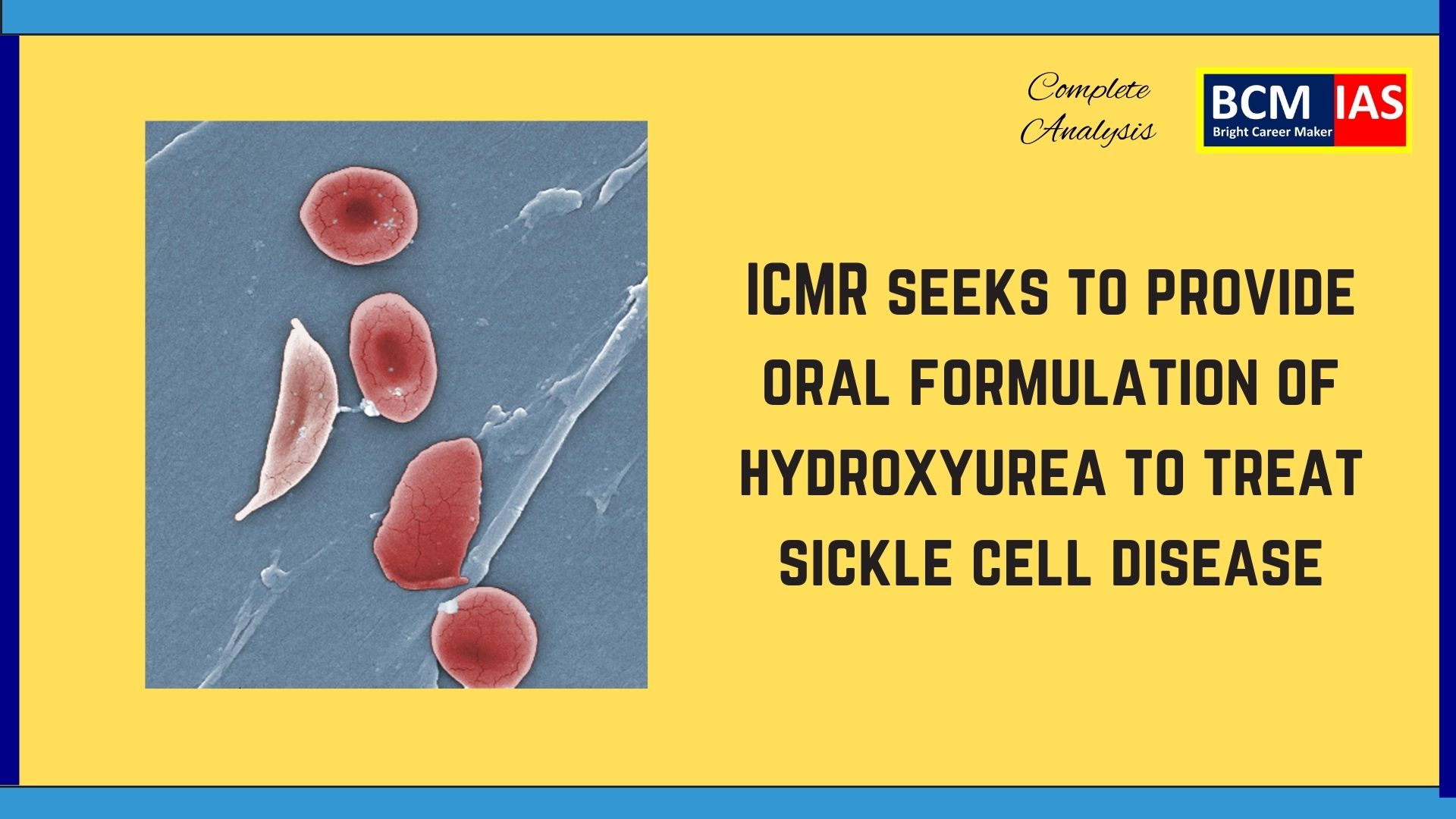
"ICMR seeks to provide oral formulation of
hydroxyurea to treat sickle cell disease"
Introduction
The article
"ICMR seeks to provide oral formulation of hydroxyurea to treat sickle
cell disease" discusses the Indian Council of Medical Research's (ICMR)
initiative to develop and commercialize a pediatric oral formulation of
hydroxyurea for treating sickle cell disease (SCD) in India. Sickle cell
disease is a genetic disorder that affects hemoglobin in red blood cells,
causing severe health issues. India has the highest prevalence of SCD in South
Asia, with over 20 million people affected. The current challenge is the lack
of suitable low-dose formulations for pediatric use.
Key Points
1. Prevalence of Sickle Cell Disease:
o
India has the highest
prevalence of SCD in South Asia.
o
Over 20 million people in
India suffer from SCD.
2. Current Treatment Challenges:
o
Existing hydroxyurea
formulations are high-dosage (500 mg or 200 mg tablets).
o
Difficulty in administering
accurate low doses for pediatric patients due to the need to break capsules.
3. Need for Pediatric Formulation:
o
The National Mission to
eliminate Sickle Cell Anaemia/SCD by 2047 emphasizes the need for suitable
pediatric formulations.
o
Pediatric formulation would
improve accurate dosing and reduce the risk of side effects.
4. ICMR's Initiative:
o
ICMR has invited Expressions
of Interest (EoI) for joint development and commercialization of a low-dose
oral formulation.
o
The goal is to create a
formulation that can be easily administered to children and improve treatment
efficacy.
5. Current Practices and Risks:
o
Healthcare providers often
initiate hydroxyurea therapy based on National Health Mission’s guidelines.
o
Breaking capsules for
pediatric dosing can lead to inaccurate administration and increased side
effects.
6. Expected Outcomes:
o
Improved titration of drug
doses.
o
Reduced dose-related side
effects.
o
Enhanced treatment adherence
and efficacy for pediatric patients.
Issues and Challenges in Treating Sickle Cell Disease
A. Prevalence
and Impact of Sickle Cell Disease:
- High Prevalence: SCD is highly prevalent
in India, affecting a significant portion of the population.
- Health Impact: SCD leads to severe
health complications, including pain crises, anemia, and organ damage.
B. Challenges
with Current Treatment Options:
- Inappropriate Dosages:
Existing high-dose hydroxyurea formulations are not suitable for pediatric
use, requiring the breaking of capsules.
- Administration Difficulties:
Accurate dosing is challenging, leading to potential underdosing or
overdosing.
- Side Effects: Inaccurate dosing
increases the risk of side effects, affecting treatment adherence and
outcomes.
C. Need for
Pediatric Formulations:
- Accurate Dosing: Pediatric formulations
ensure accurate dosing, essential for effective treatment and minimizing
side effects.
- Ease of Administration: Oral
formulations suitable for children simplify the administration process.
- Compliance and Efficacy:
Improved formulations enhance compliance and efficacy, leading to better
health outcomes.
Strategies for Developing Pediatric Formulations
A. Joint
Development and Commercialization:
- Collaborative Efforts:
Collaboration between ICMR and pharmaceutical companies for research and
development.
- Expression of Interest:
Inviting EoIs from eligible organizations to participate in the
development process.
B.
Technological and Research Innovations:
- Advanced Formulation Techniques:
Utilizing advanced pharmaceutical techniques to develop low-dose,
pediatric-friendly formulations.
- Clinical Trials and Testing:
Conducting rigorous clinical trials to ensure the safety and efficacy of
new formulations.
C. Policy and
Regulatory Support:
- Regulatory Approvals:
Streamlining regulatory approvals for new pediatric formulations.
- Government Support:
Government initiatives and funding to support research and development efforts.
Way Forward
A. Enhancing
Research and Development
- Investing in R&D:
Increasing investment in research and development to innovate and develop
effective pediatric formulations. Innovative approaches can lead to
breakthroughs in treatment options.
- Collaborative Research:
Encouraging collaboration between public and private sectors to leverage
expertise and resources. Public-private partnerships can accelerate
development processes.
B.
Strengthening Healthcare Infrastructure
- Training Healthcare Providers:
Training healthcare providers on the appropriate use of pediatric
formulations and managing SCD. Capacity building is crucial for
effective treatment delivery.
- Improving Access:
Ensuring that newly developed formulations are accessible and affordable
for all patients. Equitable access enhances treatment outcomes
across different socio-economic groups.
C. Raising
Awareness and Education
- Public Awareness Campaigns:
Conducting awareness campaigns to educate the public about SCD and the
importance of proper treatment. Awareness initiatives can improve
diagnosis and treatment adherence.
- Educational Programs:
Implementing educational programs for patients and caregivers about
managing SCD and using medications correctly. Patient education
empowers individuals to manage their health effectively.
D. Monitoring
and Evaluation
- Tracking Outcomes:
Establishing systems to monitor and evaluate the effectiveness of new
pediatric formulations. Data-driven insights help in refining
treatment protocols.
- Feedback Mechanisms:
Creating mechanisms for healthcare providers and patients to provide
feedback on new formulations. Continuous improvement is facilitated
through real-world feedback.
E.
International Collaboration
- Global Partnerships:
Forming global partnerships to share knowledge, resources, and best
practices in treating SCD. International cooperation enhances the
collective ability to tackle health challenges.
- Adopting Global Standards:
Adopting and adapting global standards and protocols for SCD treatment to
the local context. Standardization ensures consistency and quality
in care delivery.
F. Long-term
Policy Initiatives
- Sustained Funding:
Ensuring sustained funding and support for SCD research and treatment
programs. Long-term commitment is essential for lasting impact.
- Comprehensive Healthcare Policies:
Developing comprehensive healthcare policies that integrate SCD treatment
and management into broader health initiatives. Integrated approaches
improve overall health outcomes.
In
conclusion, addressing the challenge of treating sickle cell disease in India
requires a multifaceted approach involving research and development, healthcare
infrastructure, awareness, and policy support. By developing suitable pediatric
formulations of hydroxyurea, collaborating with various stakeholders, and
ensuring effective implementation, we can improve the quality of life for
millions of SCD patients in India. This comprehensive strategy will help in
achieving the National Mission to eliminate Sickle Cell Anaemia/SCD by 2047 and
enhance the overall health landscape of the country.
MCQs for Practice
1. What is the main objective of ICMR's initiative mentioned in the
article?
o
A) To develop a vaccine for
sickle cell disease
o
B) To provide a low-dose oral
formulation of hydroxyurea for pediatric use
o
C) To eradicate malaria in
India
o
D) To build new hospitals in
rural areas
o
Answer: B
o
Explanation: The main
objective is to develop and commercialize a pediatric oral formulation of
hydroxyurea to treat sickle cell disease.
o
2. Why is there a need for a pediatric formulation of hydroxyurea according
to the article?
o
A) Existing formulations are
too expensive
o
B) High-dosage tablets are not
suitable for children
o
C) Vaccination rates are low
o
D) Lack of trained healthcare
providers
o
Answer: B
o
Explanation: Existing
high-dosage hydroxyurea tablets are not suitable for pediatric use,
necessitating the development of a low-dose formulation.
3. What is a significant challenge in treating pediatric patients with
sickle cell disease as mentioned in the article?
o
A) Lack of awareness about the
disease
o
B) Difficulty in breaking
capsules for accurate dosing
o
C) High cost of medication
o
D) Insufficient medical
facilities
o
Answer: B
o
Explanation: The
significant challenge is the difficulty in breaking high-dosage capsules to
achieve accurate low doses for pediatric patients.
4. What potential benefit does the development of a pediatric formulation
of hydroxyurea offer?
o
A) Higher profits for
pharmaceutical companies
o
B) Improved accuracy in dosing
and reduced side effects
o
C) Increased healthcare
provider workload
o
D) Lower healthcare costs
o
Answer: B
o
Explanation: The
development of a pediatric formulation offers improved accuracy in dosing and
reduced dose-related side effects.
5. By when does the National Mission aim to eliminate Sickle Cell
Anaemia/SCD in India?
o
A) 2025
o
B) 2030
o
C) 2040
o
D) 2047
o
Answer: D
o
Explanation: The
National Mission aims to eliminate Sickle Cell Anaemia/SCD by the year 2047.
Probable Conceptual Question for UPSC Mains Exam
Question:
Discuss the challenges and strategies for developing pediatric formulations of
drugs in India, with reference to the treatment of sickle cell disease.
Answer for
UPSC Civil Services Mains Exam
1.
Introduction
Sickle cell
disease (SCD) is a severe genetic disorder affecting hemoglobin in red blood
cells, leading to chronic health issues such as pain, anemia, and organ damage.
India has one of the highest prevalences of SCD globally, with over 20 million
people affected. The Indian Council of Medical Research (ICMR) has taken a
significant step towards addressing this health crisis by inviting Expressions
of Interest (EoI) for the joint development and commercialization of a
pediatric oral formulation of hydroxyurea, a drug effective in treating SCD.
This initiative aims to provide a suitable low-dose formulation for children,
addressing the limitations of existing high-dose capsules.
2. Demand of
the Question
Challenges in Developing Pediatric Formulations
A. Current
Treatment Limitations:
- High-Dosage Capsules: The
existing formulations of hydroxyurea are available in high-dose capsules
(500 mg or 200 mg), which are not suitable for pediatric use.
Administering accurate low doses to children requires breaking these
capsules, leading to dosage inaccuracies.
- Administration Difficulties:
Breaking capsules for pediatric dosing is a tedious process, increasing
the risk of underdosing or overdosing. This can result in suboptimal
treatment outcomes and potential side effects.
B. Need for
Accurate Pediatric Formulations:
- Precise Dosing: Pediatric formulations
must ensure precise dosing to avoid side effects and achieve the desired
therapeutic effect. Inaccurate dosing can lead to complications and reduce
treatment efficacy.
- Ease of Administration: Oral
formulations tailored for children improve adherence to treatment
protocols, as they are easier to administer compared to broken capsules.
C. Regulatory
and Developmental Challenges:
- Research and Development:
Developing pediatric formulations involves extensive research, clinical
trials, and testing to ensure safety and efficacy. This process requires
significant investment and collaboration between research institutions and
pharmaceutical companies.
- Regulatory Approvals:
Obtaining regulatory approvals for new formulations is a complex and
time-consuming process, involving stringent testing and compliance with
safety standards.
Strategies for Developing Pediatric Formulations
A.
Collaborative Research and Development:
- Public-Private Partnerships:
Encouraging collaborations between government research institutions like
ICMR and private pharmaceutical companies to leverage expertise and
resources. These partnerships can accelerate the development process and
ensure the availability of effective pediatric formulations.
- Expression of Interest (EoI):
Inviting EoIs from eligible organizations to participate in the joint
development and commercialization of pediatric formulations, as initiated
by ICMR, is a crucial step in fostering collaboration and innovation.
B.
Technological Innovations:
- Advanced Formulation Techniques:
Utilizing advanced pharmaceutical technologies to develop stable, low-dose
oral formulations suitable for children. Techniques such as
microencapsulation and nanotechnology can enhance the stability and
bioavailability of the drug.
- Clinical Trials and Testing:
Conducting rigorous clinical trials to assess the safety, efficacy, and
dosage requirements of the new pediatric formulations. This ensures that
the formulations meet regulatory standards and provide optimal therapeutic
benefits.
C. Policy and
Regulatory Support:
- Streamlined Regulatory Processes:
Simplifying and expediting the regulatory approval processes for pediatric
formulations to bring them to market faster. This includes fast-track
approvals and dedicated pathways for essential medications.
- Government Incentives:
Providing financial incentives, grants, and subsidies to support research
and development activities focused on pediatric drug formulations. This
encourages investment and innovation in this critical area.
3. Way Forward
A. Enhancing
Research and Development Capacity
- Investment in R&D:
Increasing investment in research and development to create innovative
pediatric formulations. R&D funding is essential to drive
innovation and address unmet medical needs.
- Building Expertise:
Developing a skilled workforce with expertise in pediatric pharmacology
and formulation development. Capacity building through training
programs and academic partnerships can enhance the quality of research.
B.
Strengthening Healthcare Infrastructure
- Healthcare Provider Training:
Training healthcare providers on the appropriate use of pediatric
formulations and managing sickle cell disease. Healthcare training
ensures that providers can deliver effective treatment and support to
patients.
- Improving Accessibility:
Ensuring that new pediatric formulations are accessible and affordable for
all patients, particularly in rural and underserved areas. Equitable
access to medications is crucial for achieving public health goals.
C. Promoting
Public Awareness and Education
- Awareness Campaigns:
Conducting public awareness campaigns to educate the community about
sickle cell disease and the importance of proper treatment. Awareness
initiatives can improve diagnosis rates and treatment adherence.
- Patient and Caregiver Education:
Implementing educational programs for patients and caregivers to
understand the disease, treatment options, and proper medication
administration. Education and support empower patients to manage
their health effectively.
D. Monitoring
and Evaluation
- Data Collection and Analysis:
Establishing robust systems for monitoring and evaluating the
effectiveness of new pediatric formulations. Data-driven insights
help refine treatment protocols and improve patient outcomes.
- Feedback Mechanisms:
Creating mechanisms for healthcare providers and patients to provide
feedback on the new formulations. Continuous feedback ensures that
improvements can be made based on real-world experiences.
E.
Encouraging International Collaboration
- Global Partnerships:
Forming global partnerships to share knowledge, resources, and best
practices in developing pediatric formulations. International
cooperation enhances the collective ability to address health
challenges.
- Adopting Global Standards:
Adapting and implementing global standards and protocols for the treatment
of sickle cell disease to ensure consistency and quality in care delivery.
Standardization improves treatment outcomes and safety.
F. Long-term
Policy Initiatives
- Sustained Funding and Support:
Ensuring sustained funding and government support for sickle cell disease
research and treatment programs. Long-term commitment is essential
for achieving significant health improvements.
- Integrated Healthcare Policies:
Developing integrated healthcare policies that incorporate sickle cell
disease management into broader health initiatives. Comprehensive
policies enhance the overall healthcare system and patient care.
In
conclusion, the development of pediatric formulations of hydroxyurea is a
critical step in addressing the treatment challenges of sickle cell disease in
India. By leveraging collaborative research, technological innovations, policy
support, and public awareness, India can improve the quality of life for
millions of children affected by this genetic disorder. Ensuring accessible,
accurate, and effective treatment options will contribute to the National
Mission's goal of eliminating Sickle Cell Anaemia/SCD by 2047 and strengthen
the country's healthcare system.


Comments on “"ICMR seeks to provide oral formulation of hydroxyurea to treat sickle cell disease"”